
Freight, customs and the two gaps
Getting the bike there
Three times the bike travelled without me. Once by plan, twice because there was no road — or no way through.
- Freight and flights, USD
- 4'787
- Separate legs
- 3
- Days in customs
- 14
- Km not ridden
- 1'900
Zurich to Buenos Aires
The bike went in a wooden crate and flew as cargo. I flew separately. Freight and passenger do not travel together, and you should plan on the bike arriving a day or two ahead of you rather than behind.
The single thing that moved the price was the size of the crate. Air freight is charged on volumetric weight, in my case about USD 4.50 per kilo, so every centimetre of empty air in the box costs money.
| Bike, crated, air freight | 2'426 |
| My flight, ZRH–EZE | 331 |
| Total | 2'757 |
| Crate | Size, cm | Volume weight | All-in | Handled myself |
|---|---|---|---|---|
| Standard crate | 250 × 115 × 135 | 647 kg | 3'805 | 3'226 |
| Small crate | 220 × 100 × 120 | 440 kg | 2'926 | 2'347 |
| What I ended up with | 220 × 80 × 140 | 411 kg | 2'801 | 2'222 |
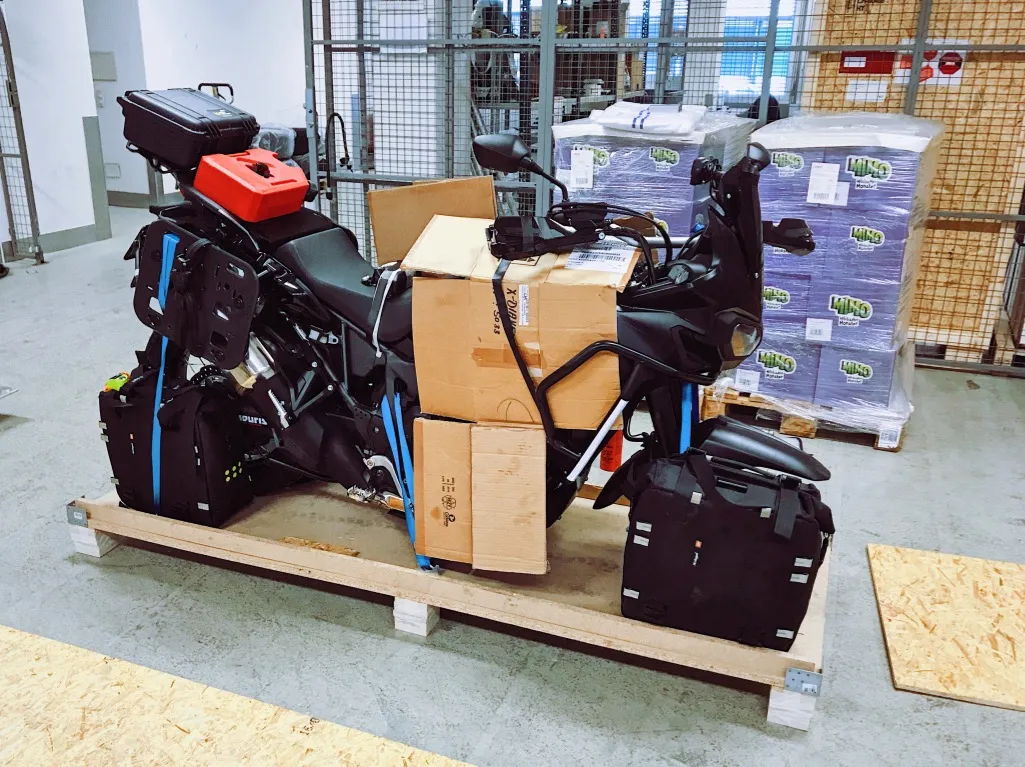
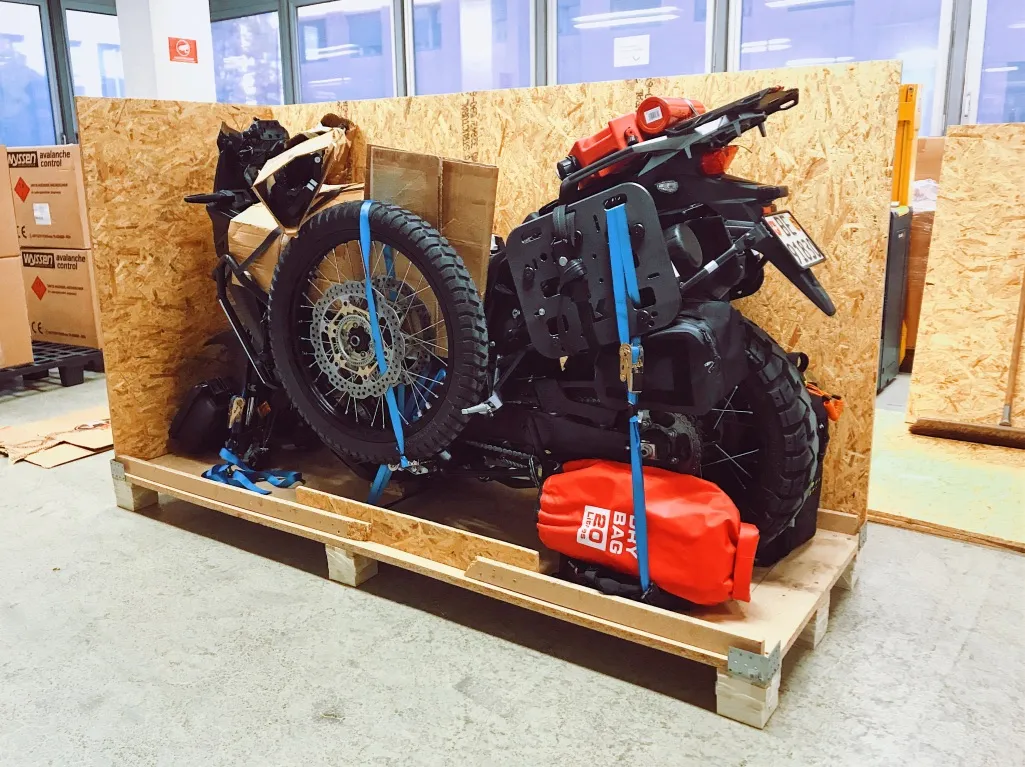
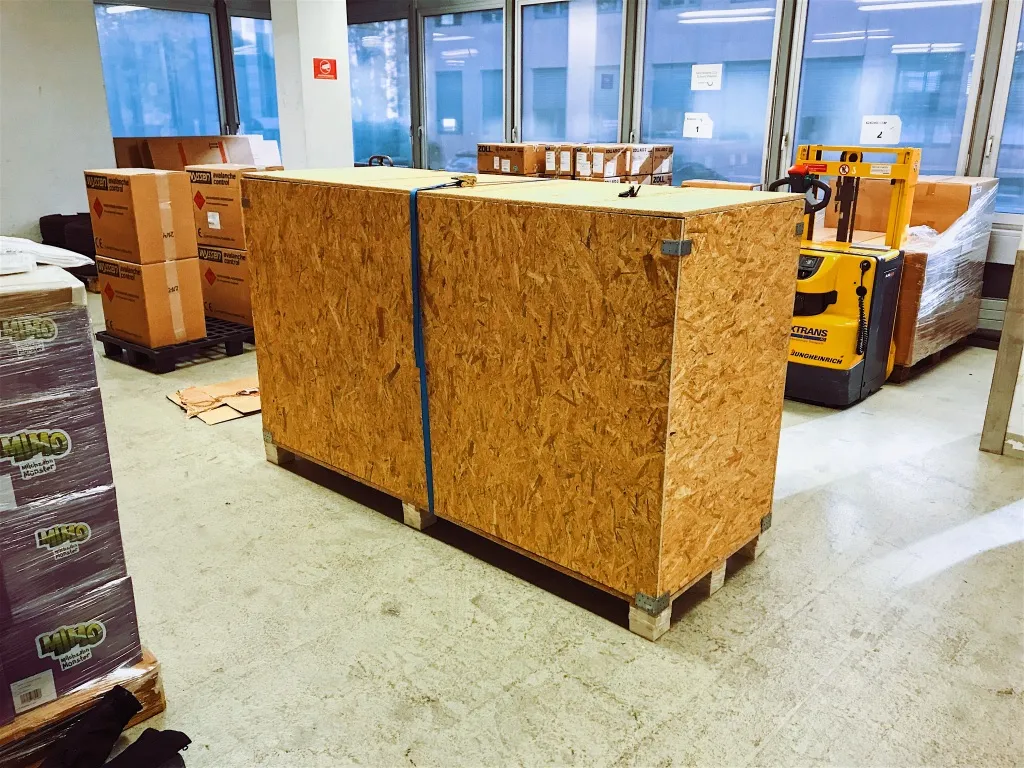
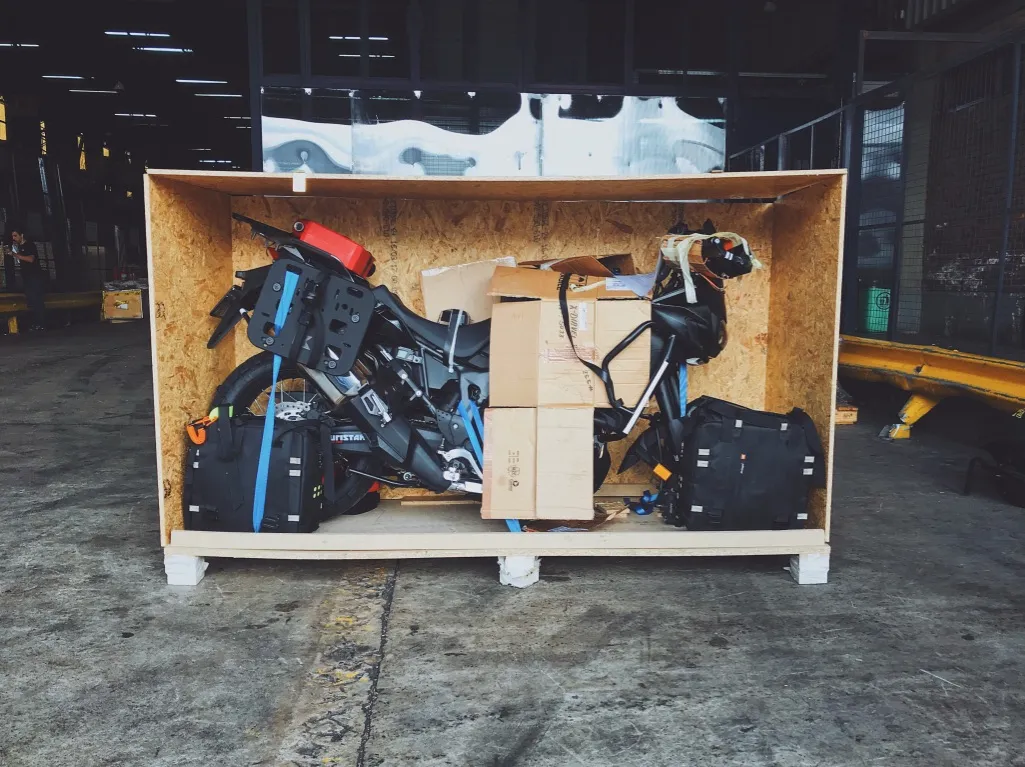
- Measure the crate, then argue about it. Going from the standard box to the one I used saved about USD 1,070 on an identical shipment.
- Doing the packing and delivery yourself instead of buying the all-in service saved roughly another USD 620.
- You are billed on volumetric weight or actual weight, whichever is higher. The bike and crate weighed about 310 kg; the box measured 411 kg. The box won, so the box is what you optimise.
- Tank empty, battery disconnected and the terminals insulated. Airlines refuse bikes that turn up otherwise.
- Strip what sticks out. Screen, mirrors and panniers came off and travelled beside the bike rather than on it. The front wheel came out too, which is what brought the length down.
- Luggage can travel inside the crate, but the forwarder needs the contents list in advance.
- Start three to six months out. I dropped the bike at the freight terminal in Zurich well before I flew.
The Darién Gap
There is no road between Colombia and Panama. Sixty miles of swamp and jungle, no bridge, no ferry, and every rider heading north has to solve it the same way: the bike goes as freight and you buy a passenger ticket on a different aircraft.
The usual choice is a container by sea out of Cartagena, which is cheaper and slower, or air freight out of Bogotá, which is neither. We flew the bikes.
My GPS track simply stops in Bogotá and starts again at Tocumen airport in Panama City, 766 km later. That gap is the only place on the whole ride where the line on the map is a lie.
| Bike, Bogotá to Panama City | 1'088 |
| My flight, Bogotá–Panama City | 195 |
| Total | 1'283 |
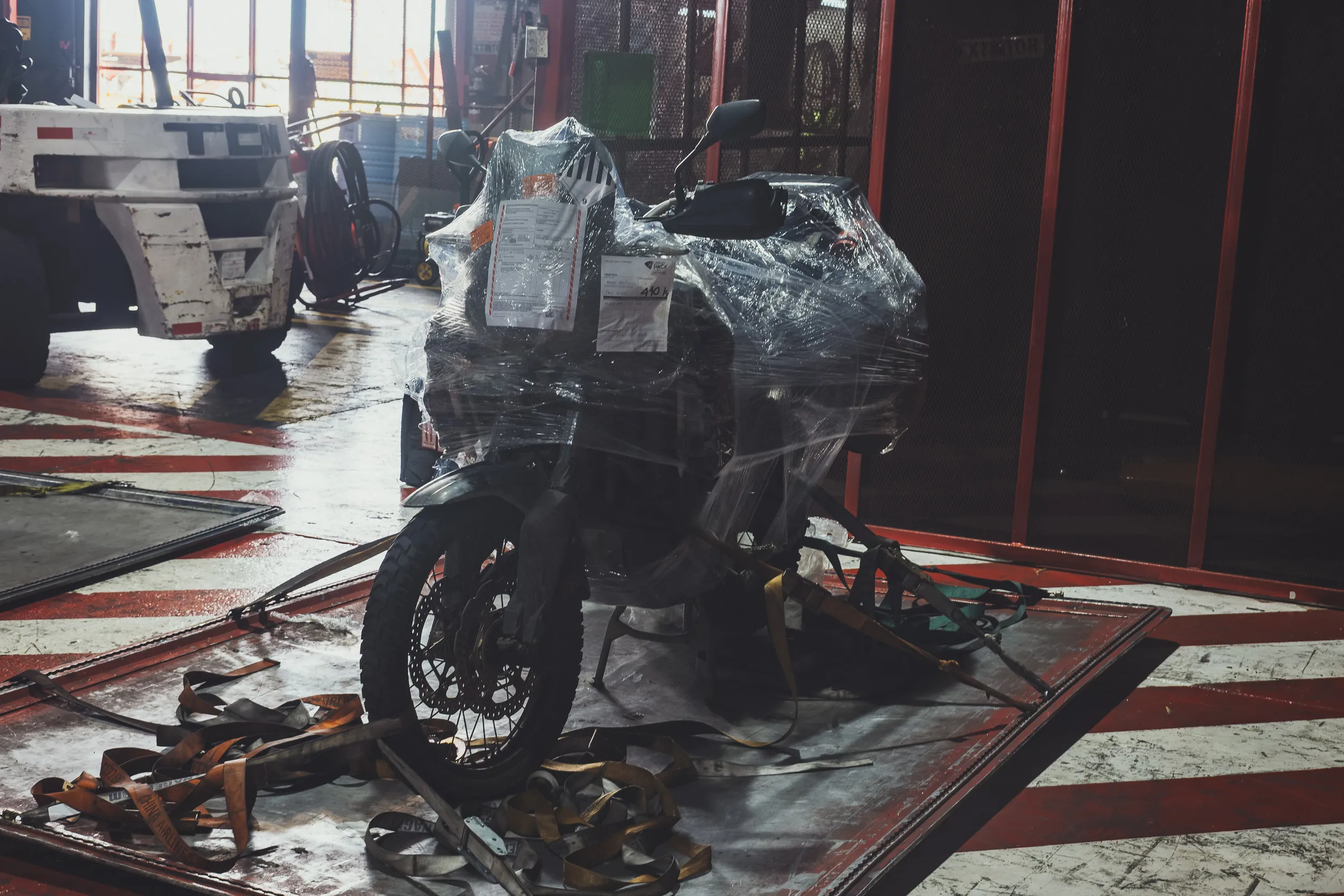
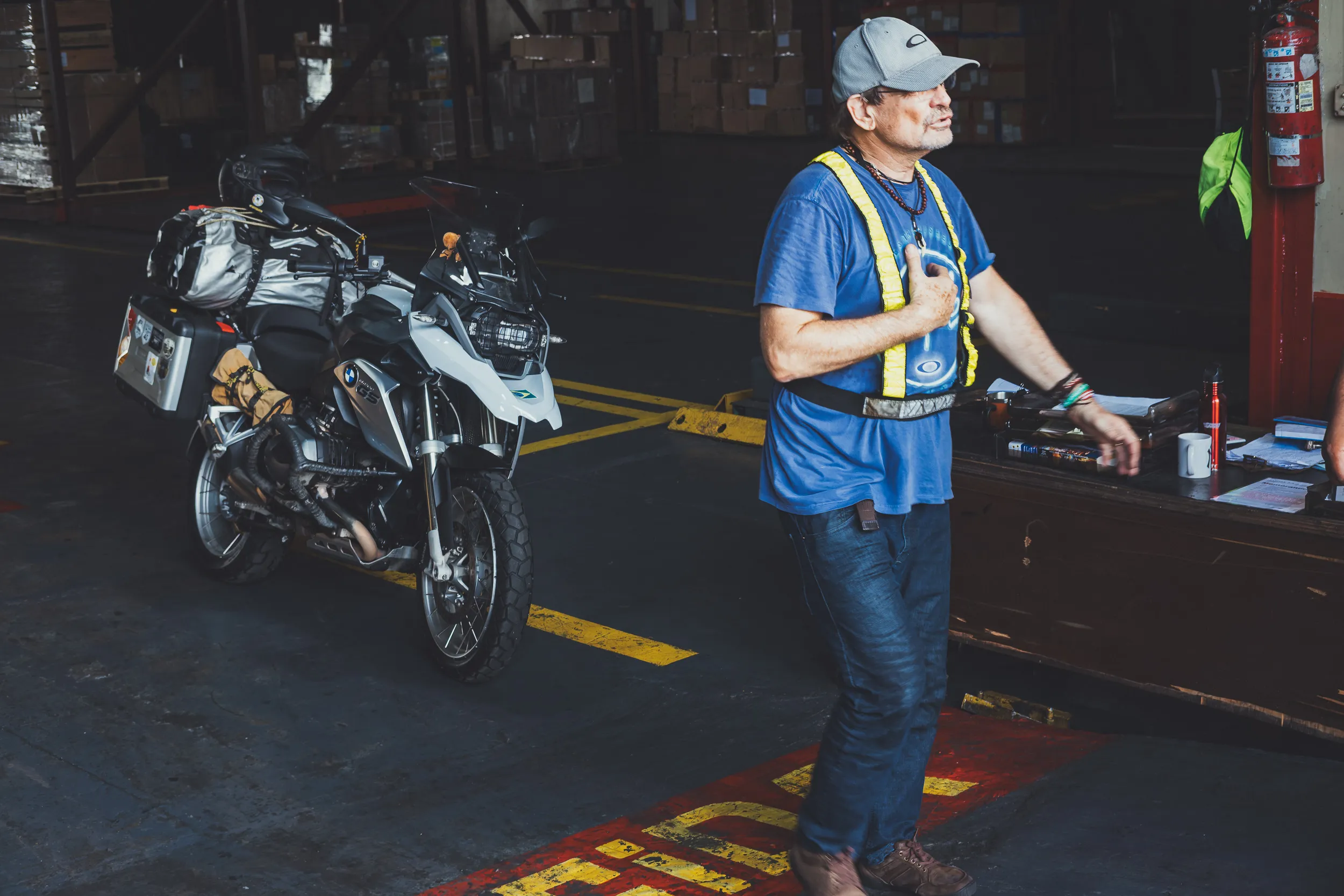
- Air freight means the bike is wrapped and palletised rather than crated. Less preparation than a wooden box, and it is handled far more.
- The bike and the rider arrive on different days. Budget hotel nights at both ends, and do not book anything onward until the bike is actually in your hands.
- Sharing a pallet or a container with other riders is the standard way to bring the cost down. By Bogotá there is usually a group forming.
- Everything loose comes off or gets wrapped in. Nothing that can be unbolted in a warehouse should be left bolted on.
Around Nicaragua
This one was not in the plan. Nicaragua went up in April 2018: protests, roadblocks thrown up by locals, and a government response that made the whole country a bad place to be on a foreign-plated motorcycle.
We had heard of riders who got through. The barricades were manned by locals, and the word was that if you approached them the right way, they would let you pass. So we rode north through Costa Rica to the border to try it.
The officials at the border turned us around with a warning. That was the end of the argument. We rode back south to Panama, found a forwarder who would put the bikes on a boat to Puerto Cortés, and flew.
Then the bikes got stuck in customs at Puerto Cortés. Two weeks in San Pedro Sula waiting for them to clear.
| Bike, Panama to Puerto Cortés | 346 |
| My flight to Honduras | 400 |
| Total | 747 |
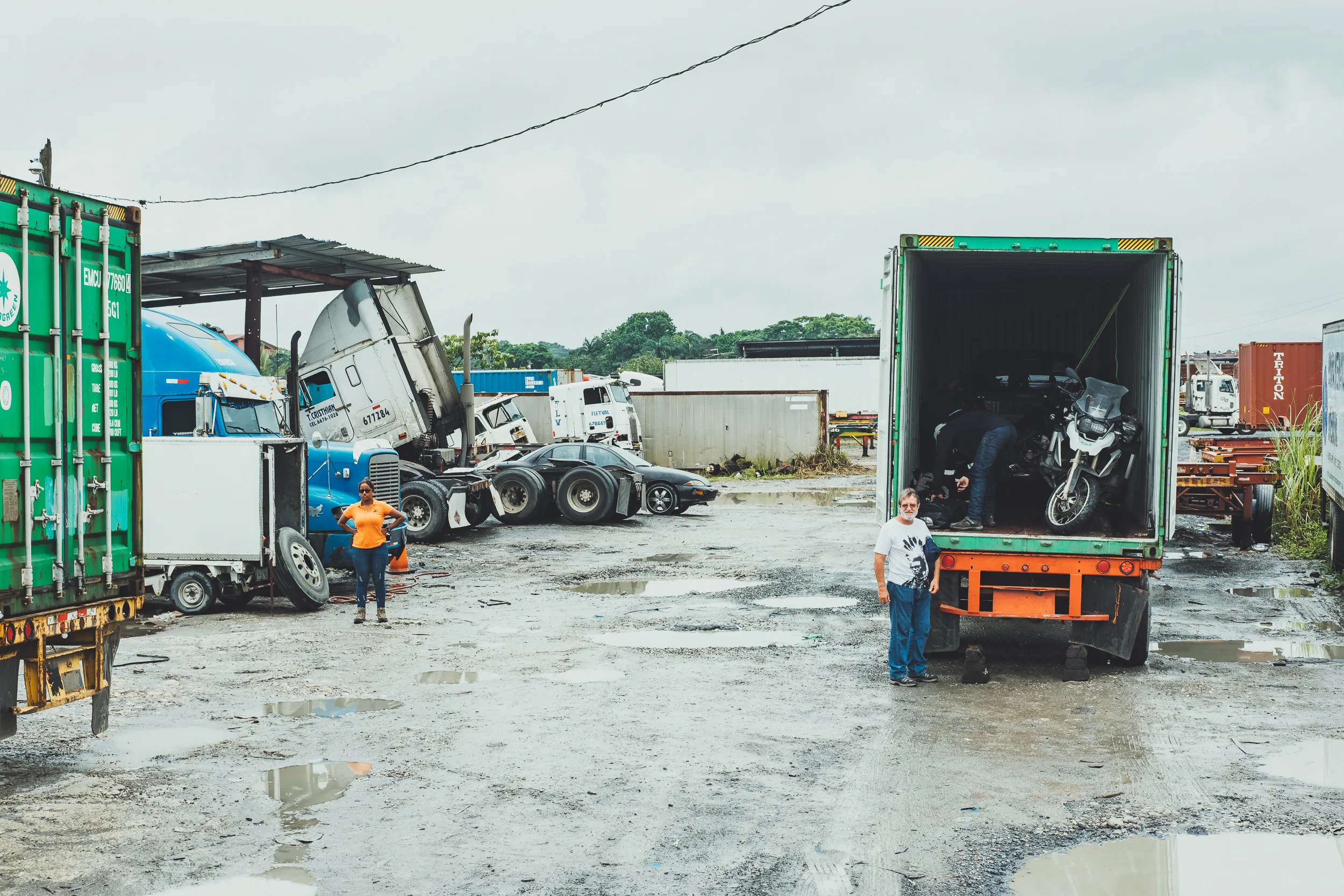
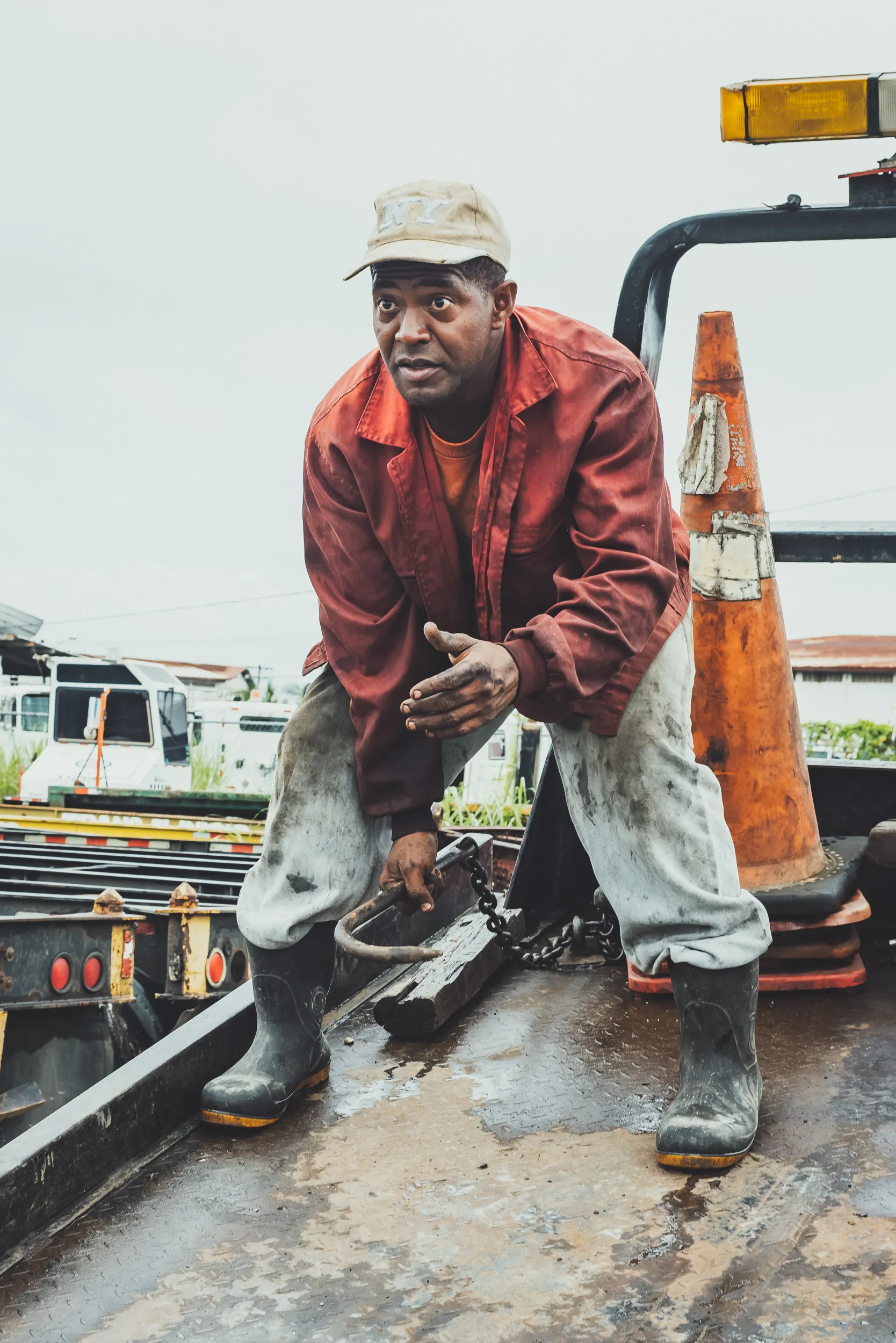
- The detour cost about 900 km of riding to a border we could not cross, six days, about USD 750 in freight, and two weeks of waiting on the other side.
- Insurance is bought per country at the border. We paid for Costa Rica on the way up and Panama again on the way back down.
What I would do differently
Nothing about the Darién. There is no road, there was never going to be a road, and the cost of getting round it is simply part of the price of riding the Americas.
Nicaragua I would do the same way again. We had heard of riders who got through, and sitting in Panama arranging freight without having gone to look would have been the sensible decision and the wrong one. I would rather have tried and been turned around than wondered.
What I had not reckoned with was the waiting. On a motorcycle you reach places backpackers will not go and cars cannot get to, and moving becomes a habit — you get up, you pack, you ride. So when you have to stop, whether that is customs or a mechanical problem, it is genuinely frustrating.
San Pedro Sula was two weeks of exactly that. You feel helpless. There is nothing you can actually do, no amount of turning up at the office earlier changes anything, and every day produces a new requirement that was not mentioned the day before.
In hindsight those were good challenges to have had. Carrying on afterwards was all the more rewarding for them.